
Wood, blue, white, and red pigments
sizes : 23.5 x 14 cm
Estimated date: second half ofthe 19th
Yup’ik people
Lower Yukon River–Norton Sound region
Alaska, USA
Provenance:
Helene and Philippe Leloup, Paris-New York
Private collection, New York; acquired from the previous owners in 1989
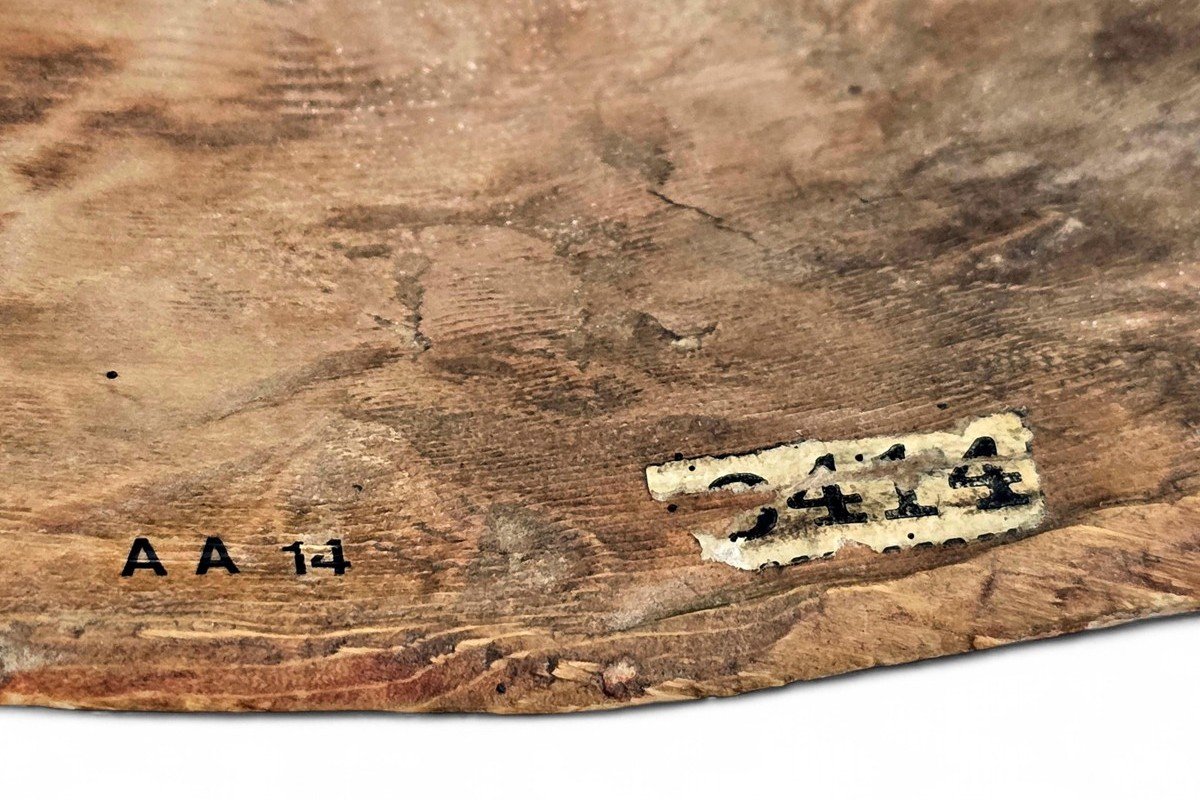
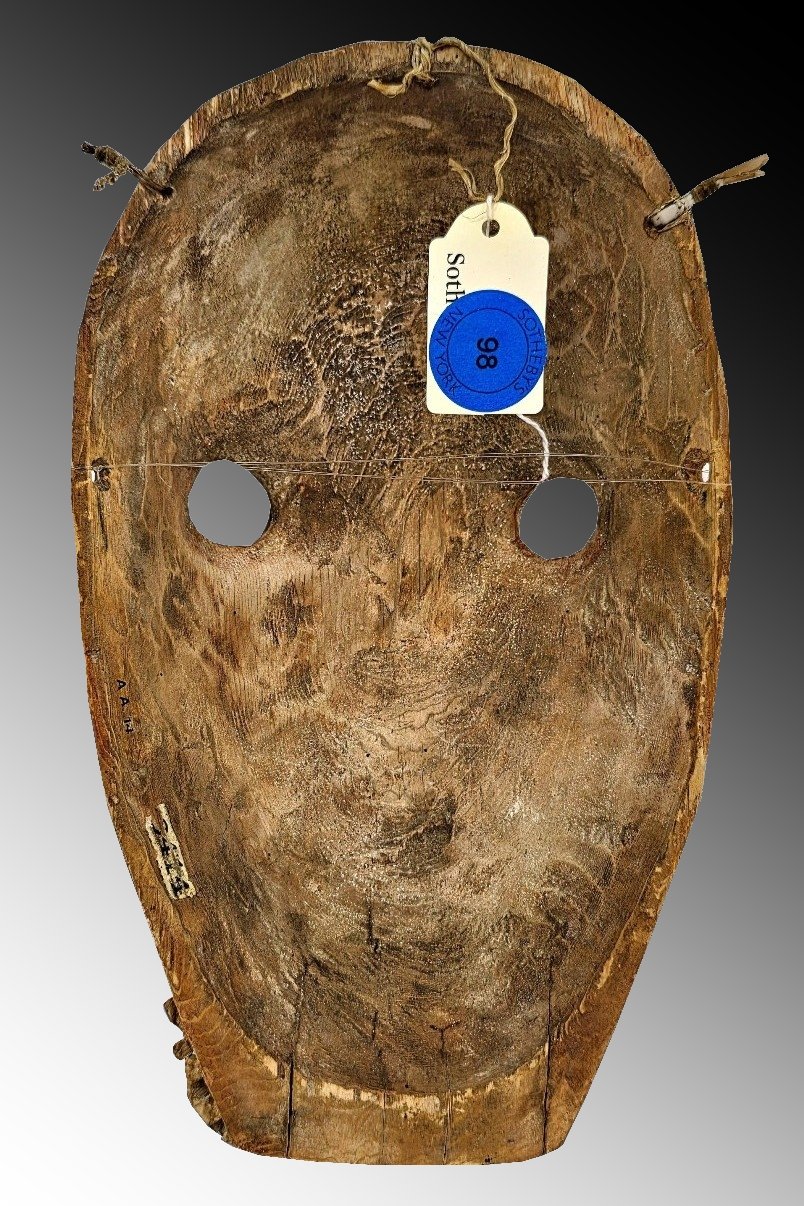
Sotheby’s New York, “Arts of the American West,” May 21, 2014, lot no. 98
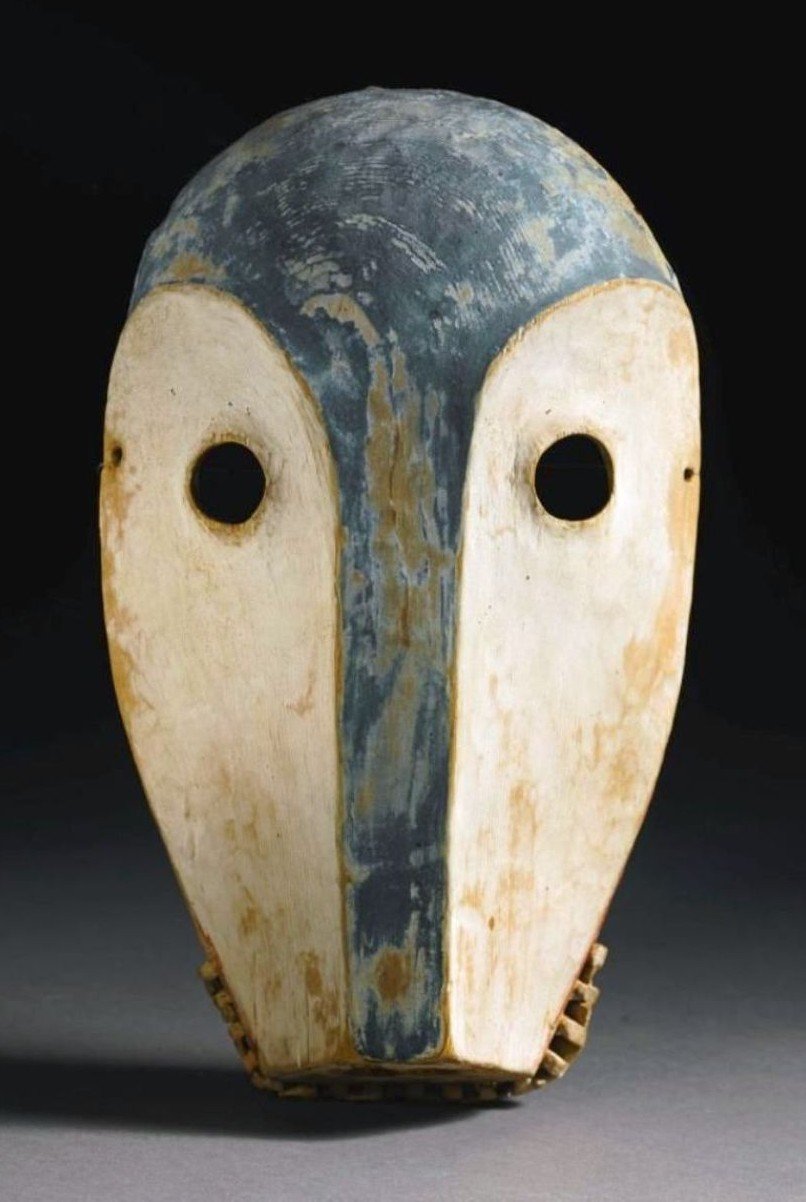
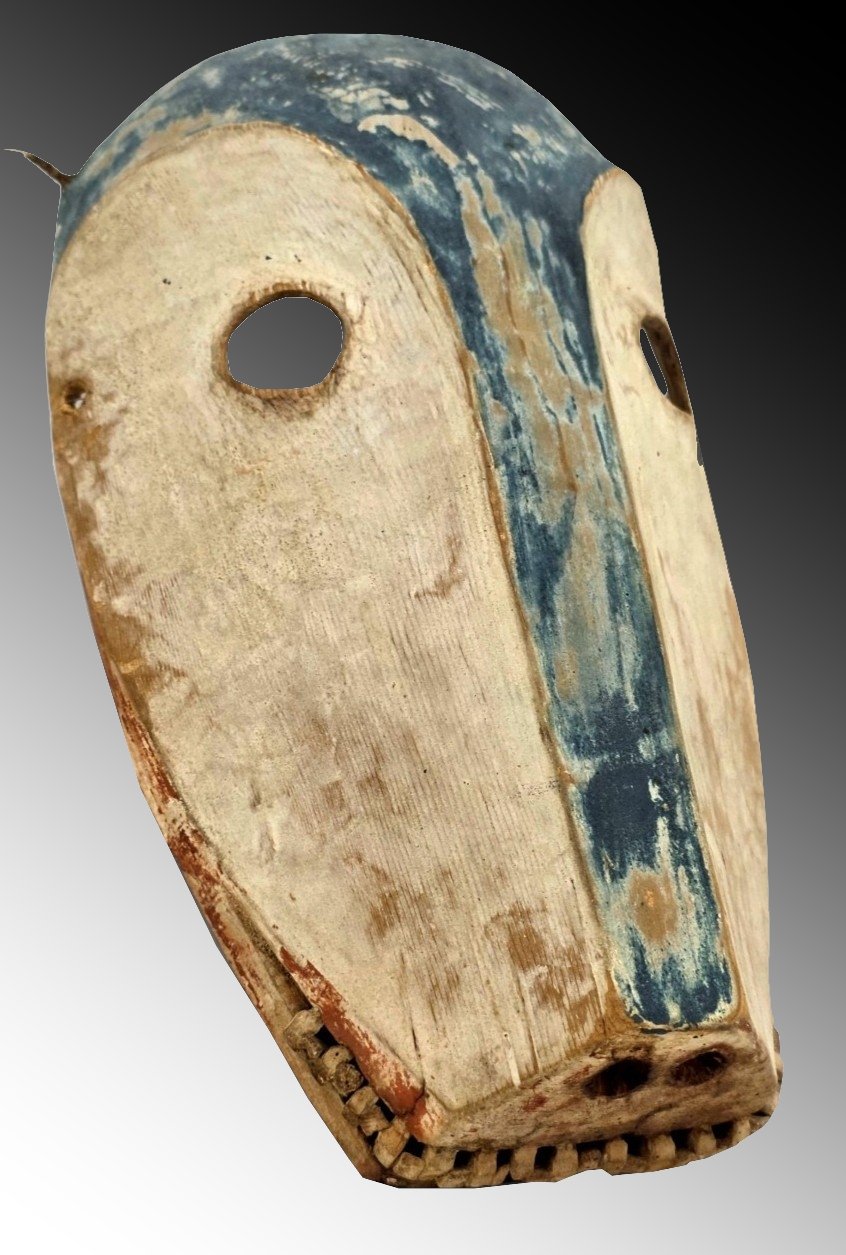
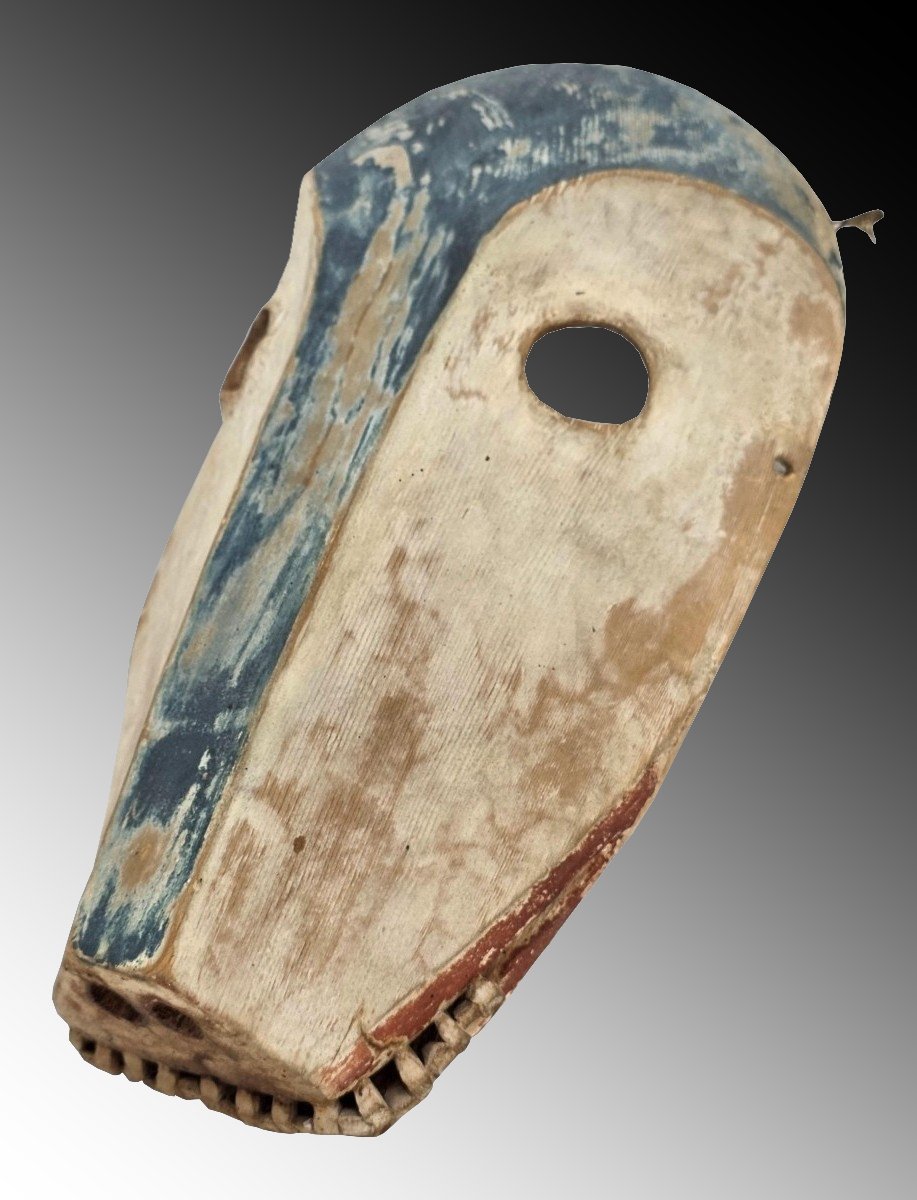
This mask, carved around 1875, likely depicts a wolf. It features a broad jaw holding individually carved wooden teeth secured with pegs. The jaw is outlined in red pigment. A blue line extends from the nostrils up the center of the face, passes over the eyes, and continues to the forehead.
The rest of the face is covered with a layer of white paint.
Two remnants of the original feathers are still preserved at their attachment points, along with additional empty holes that once held a more elaborate arrangement of feathers, enhancing the mask’s ceremonial appearance during dances.
The red pigment comes from hematite (iron oxide), the blue pigment from copper oxide or berry juice, and the white pigment from white clay.
Within Yup’ik communities, masks played an active role in ceremonies, dances, storytelling, commemoration, and the expression of the relationships between the human, animal, and spiritual worlds. Rather than existing as permanent works of art, they were created to be brought to life through song and movement, giving visual form to the ideas, memories, and spiritual connections at the heart of community life.
Their intended use, combined with the fragile nature of their materials, explains why so few examples from before the 20th century have survived to this day.
Ray1, who provides a similar example, believes that this type of mask originated in the village of St. Michael (near the mouth of the Yukon River) and was used during the dances of the Messenger Festival, a celebration that “combined homage to game, entertainment, feasting, trade, and romance.” The wolf and the eagle were the most revered animals during this festival, and masked dancers reenacted myths concerning the transformation of birds into wolves (ibid.: 190–191).
This mask is part of a long-standing tradition of Yup’ik sculpture, and the surviving examples are among the most recognizable and historically significant artistic expressions of Alaska’s Indigenous art.
Particularly close parallels can be drawn with a small collection of 19th-century masks from western Alaska, which have been documented and preserved in major museum collections. The closest published comparison is that of the Yup’ik wolf mask collected in St. Michael, Alaska, now housed at the Sheldon Jackson Museum in Sitka, Alaska (Inv. SJ-II-G-1).
But also at the Smithsonian Institution in Washington, D.C. (Inv. Nos. 153632 and 153633)
At the Field Museum of Natural History, Chicago (Inv. No. 13433) and at the Lowie Museum of Anthropology, Berkeley, CA (Inv. No. 2-6921)
_______________________________________________
1- Ray, Dorothy Jean, and Blaker, Alfred A. *Eskimo Masks: Art and Ceremony*. Seattle and London: University Press of Washington, 1967 (pl. 14 and pp. 190–191).
Bibliography listing similar masks held in museums:
-Fienup-Riordan, Ann. *The Living Tradition of Yup’ik Masks*. Seattle: University of Washington Press, 1996, pp. 86, 119, 236, and 237
-Mauer, Evan. *Native American Heritage: A Survey of North American Indian Art*. Chicago: Art Institute of Chicago, 1977, p. 341, pl. 559
For further information, please contact us at
(+33)(0) 6 07 23 33 60, or leave us a message:
Galerie Franck Marcelin – 70 chemin du Moulin – 13510 Eguilles – mob: (+33)(0)6 0723 3360 – franckmarcelin@sfr.fr – copyright © 2024