
Wood, trace of ochre pigment, tapa
Dimensions: Height 20.4 cm
Presumed date of manufacture: 19th century
Stylized area of the mouth of the Sepik or Ramu River
Papua New Guinea
Provenance:
Collection Rodolfo Garrafa, Toulouse
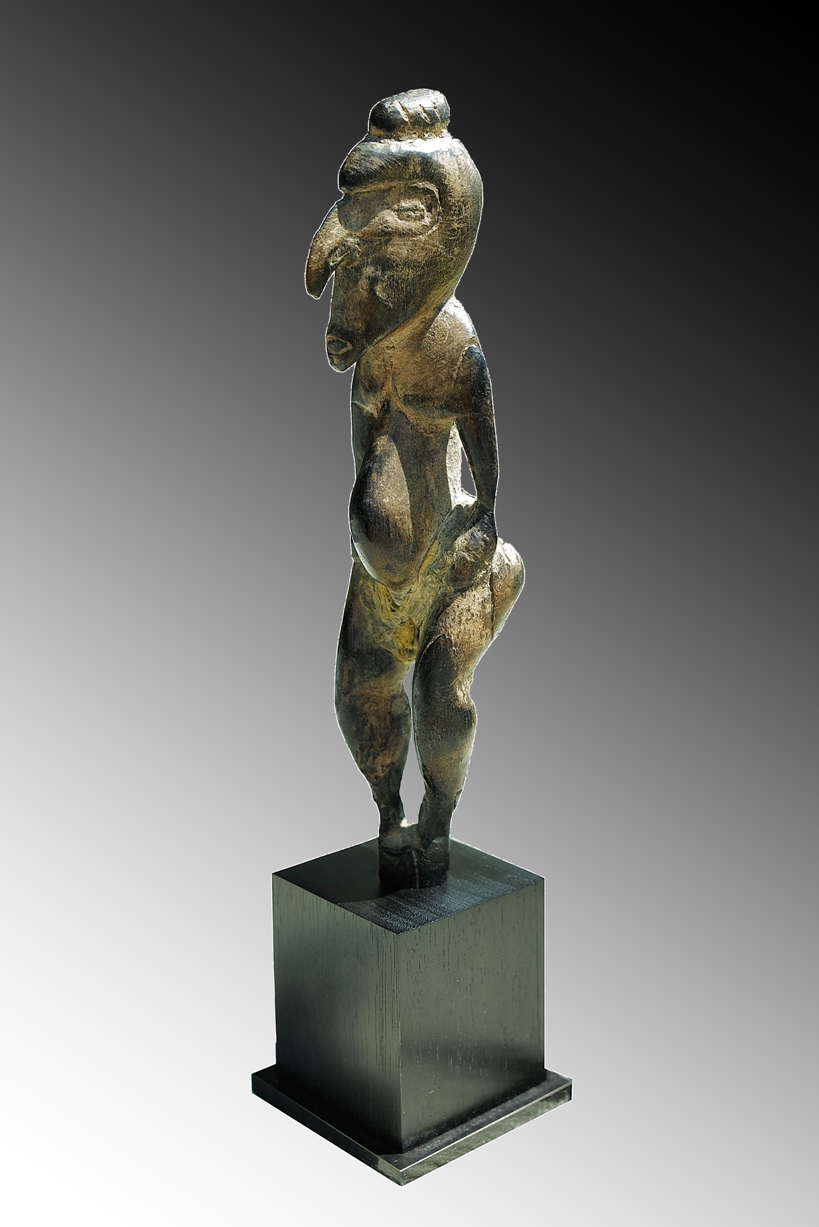
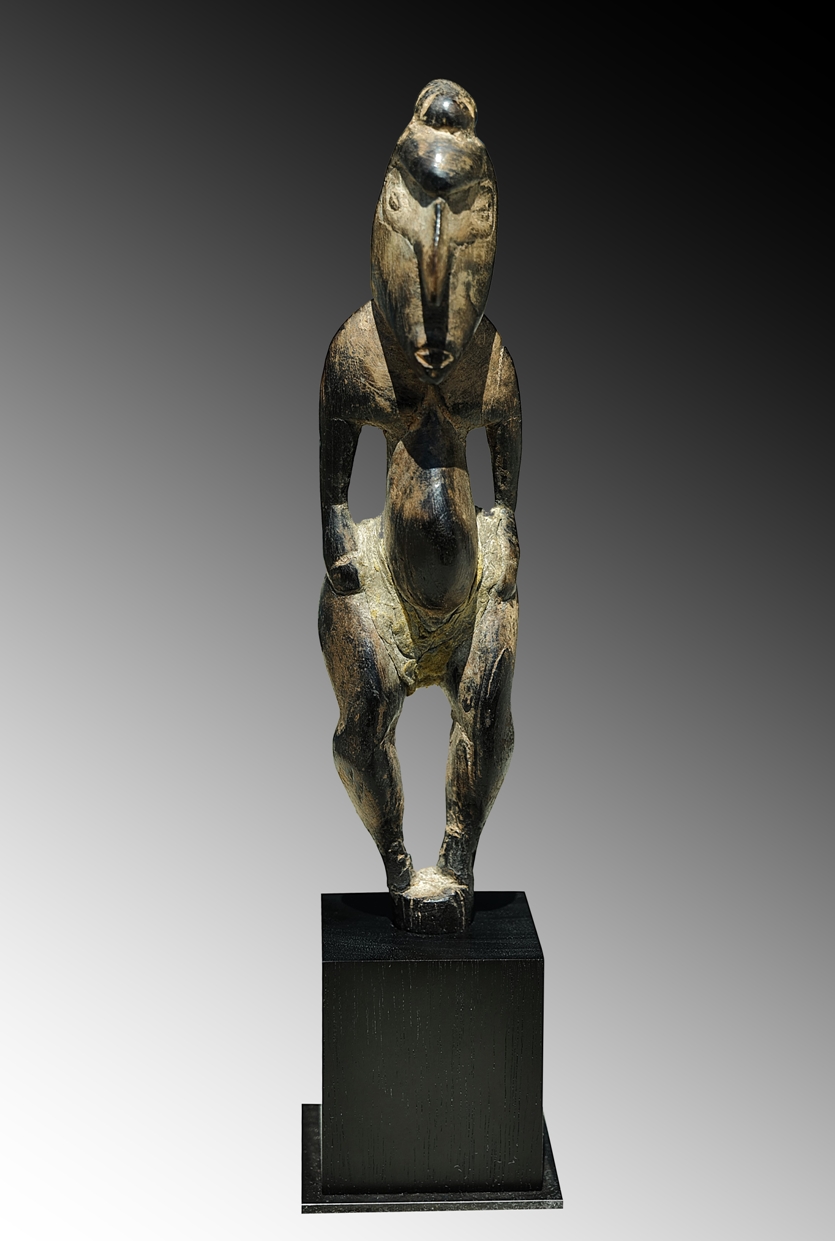
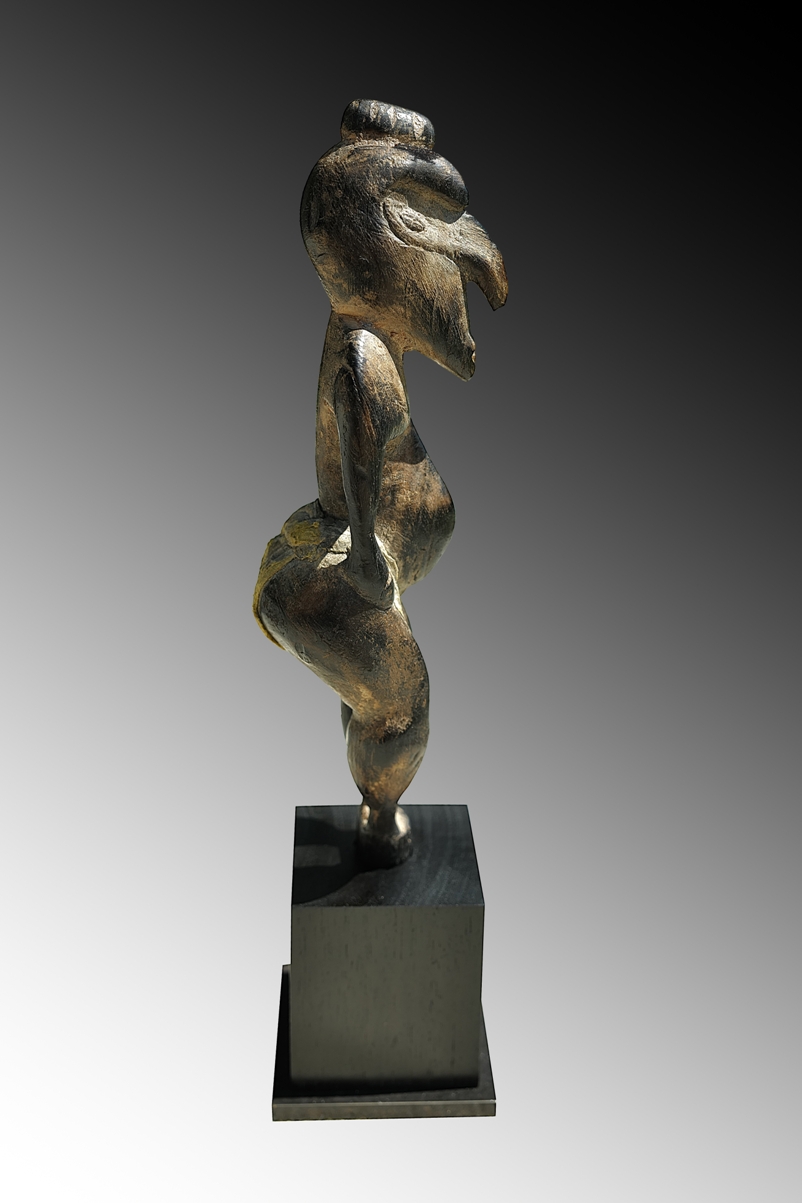
This statuette, with its hands resting on its hips and its exaggerated buttocks showing a small belly, probably represents a prominent woman.
Many women play a fundamental role in Papuan mythology.
However, only a small number of their representations are known. It appears that the names and stories of female ancestors are shrouded in greater secrecy than those of male ancestors.
According to Nancy C. Lutkehaus1, “young girls in the Lower Sepik coated their bodies with ochre pigment, adorned themselves with fragrant herbs and flowers, the finest ornaments made of dog’s teeth and shells belonging to the family, and newly braided armbands for initiation ceremonies. This attention to physical appearance illustrates a cultural theory of the relationship between beauty and power.”
This sculpture is said to represent an ancestral woman who gives power, the ability to predict and divine the future, to ease a difficult pregnancy and to help with the “magic of love”.
According to Kathleen Barlow2, young female initiates absorbed the “magic of love” – supernatural abilities to beautify and seduce – by sleeping near such ancestral figures. These spirits were considered vain and often demanded the attention of their female owners.
This piece was most likely offered to young girls as part of a puberty ceremony,
It has an exceptional patina reflecting its age.
1- Lutkehaus & Roscoe. Gender Rituals: Female initiation in Melanesia. 1995
2 – Howarth Crispin. Myth+Magic, Art of the Sepik River 2015 National Gallery of Australia, p.75
For further information, please contact us at
(+33)(0) 6 07 23 33 60, or leave us a message:
Galerie Franck Marcelin – 70 chemin du Moulin – 13510 Eguilles – mob: (+33)(0)6 0723 3360 – franckmarcelin@sfr.fr – copyright © 2024