
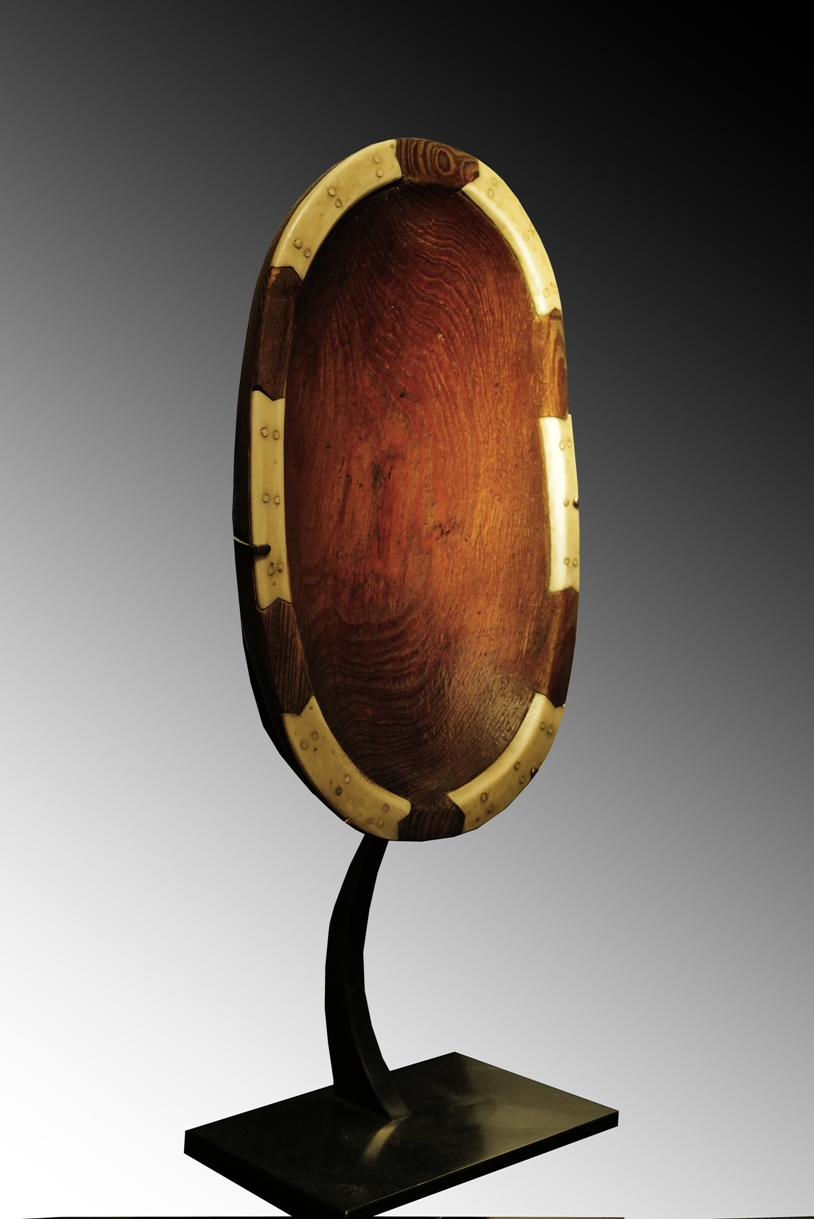
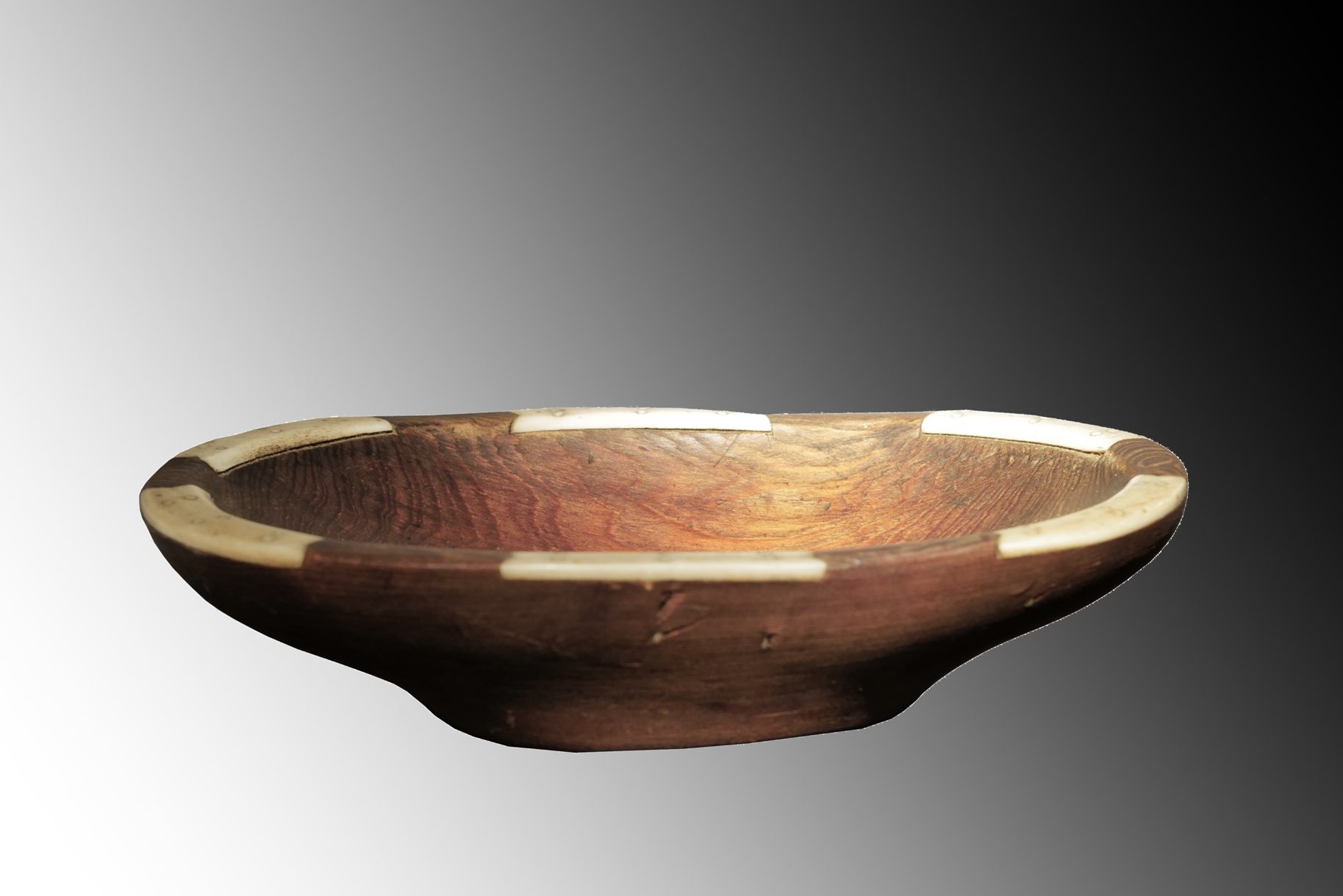
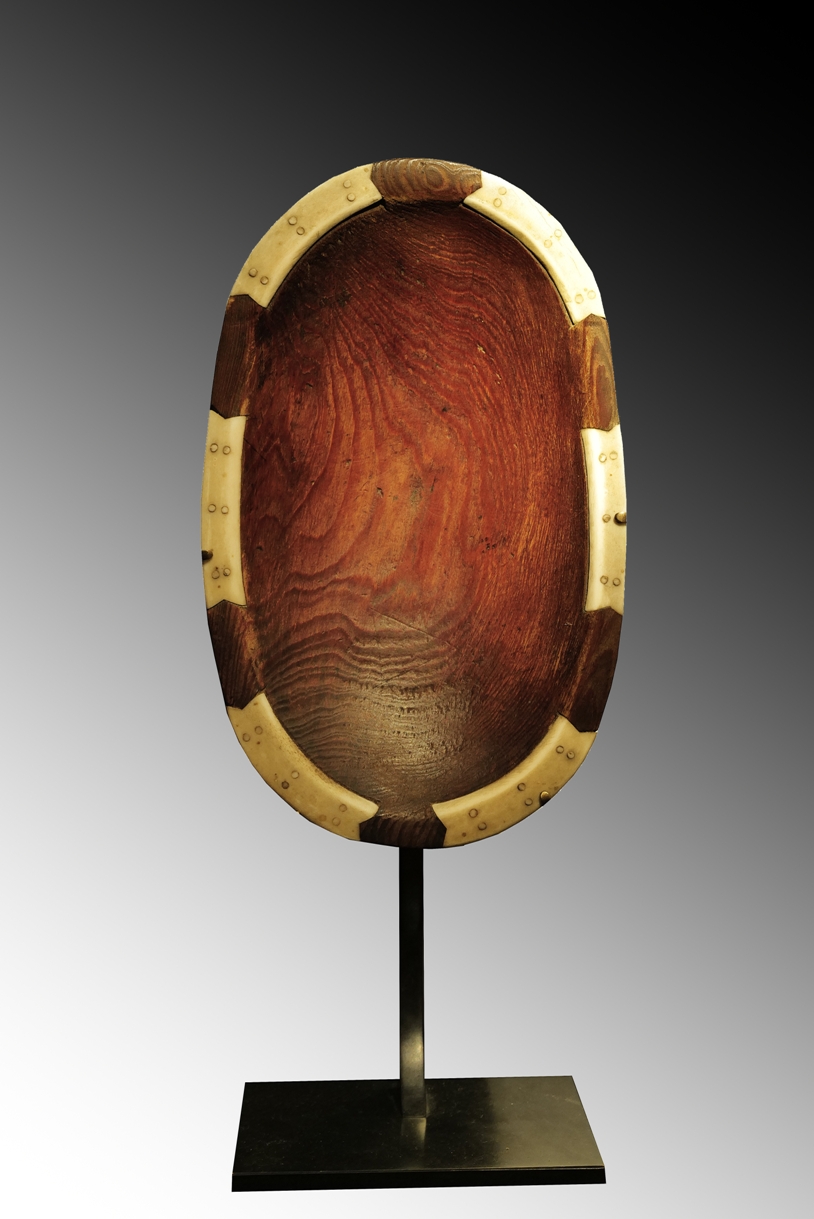
Wood, bone
Dimensions: 20 x 12.5 cm
Estimated date: First half of the 20th century
Inuit culture
Angmassalik District
Greenland
Provenance:
Andrey Tischenko Collection, Helsinki
Raton Collection, Paris
Tao Kerefoff Collection, Paris
This small, oblong dish with a shallow basin is decorated along its upper rim with six small plates held in place by bone pins
Three plates, slightly smaller in size, are housed at the Musée du Quai Branly-Jacques Chirac (Inv. No. 71.1934.175.2924, 71.1934.175.2923, and 71.1934.175.2925).
They were brought back during the French Mission’s expedition to the east coast of Greenland between July 1934 and August 1935 and were added to the collections of the Musée de l’Homme before being transferred to the Musée du Quai Branly.
On July 11, 1934*, the Pourquoi Pas? set sail from Saint Servan; Dr. Charcot was taking four members of the French Scientific Expedition to the east coast of Greenland:
Paul Emile Victor, expedition leader; Dr. Robert Gessain; Michel Perez; and Fred Matter-Steveniers.
On August 25, they landed at Angmassalik and made their first contact with the Inuit people by visiting the main villages.
From October through January, stranded at base camp due to bad weather, they set up their scientific equipment and warmly welcomed the Inuit, who, having found food and shelter, willingly participated in all the research.
From February to June, by sled (about 2,000 km), and from June to August by boat (about 700 km), they visited numerous villages before leaving Greenland on August 25.
During this expedition, Paul Emile Victor, who was in charge of the ethnographic component, assembled a large collection of artifacts for the Musée de l’Homme.
* Victor Paul. Emile. Report on the French Expeditions to Greenland.
Journal of the Society of Americanists, 1935, Vol . 27, No. 2, pp. 473–474
For further information, please contact us at
(+33)(0) 6 07 23 33 60, or leave us a message:
Galerie Franck Marcelin – 70 chemin du Moulin – 13510 Eguilles – mob: (+33)(0)6 0723 3360 – franckmarcelin@sfr.fr – copyright © 2024