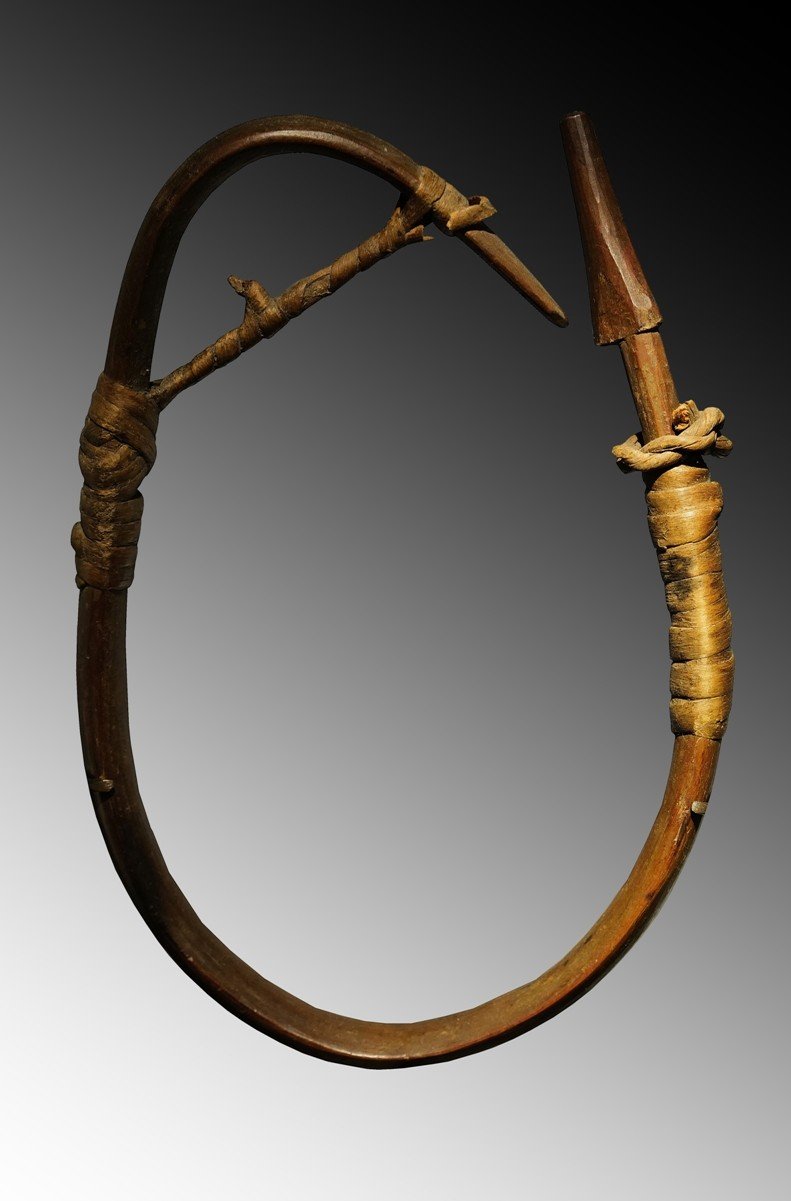
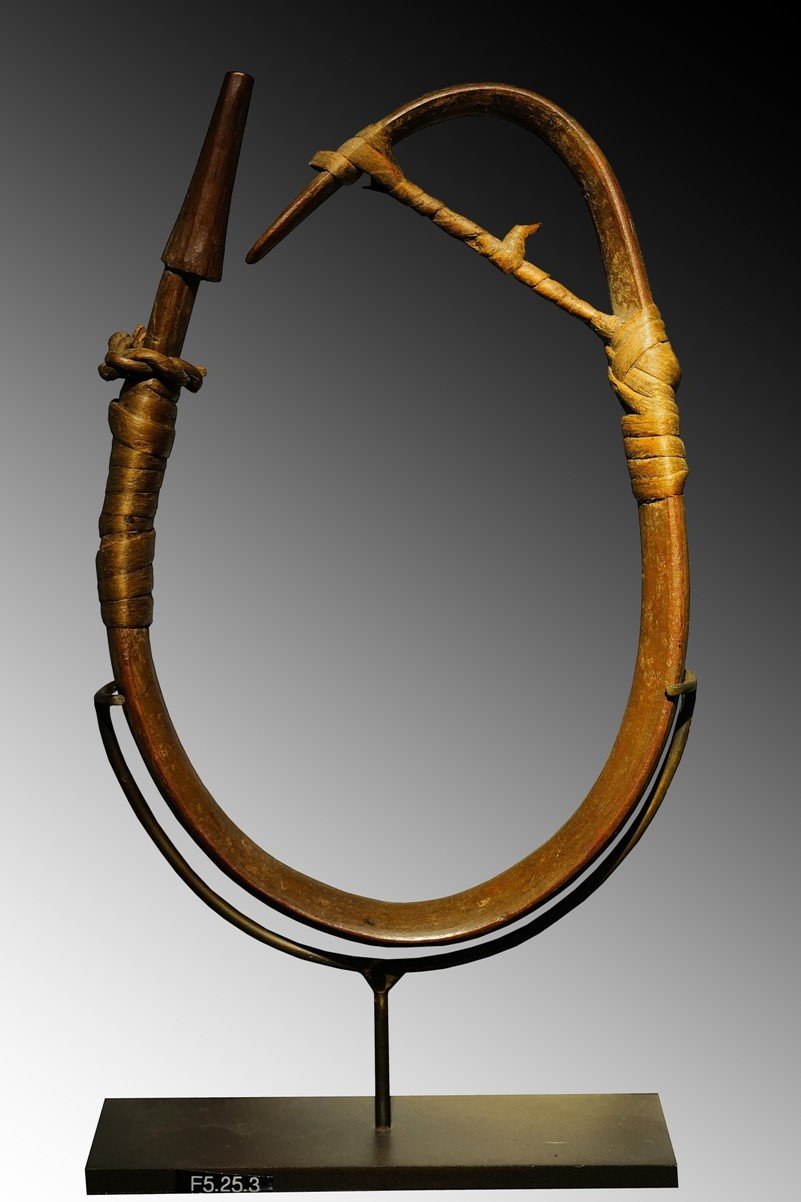
This hook was made from a single piece of steamed and bent cedar or yew.
The curved shape of the shank prevents the fish from escaping. If it struggles and pulls away, the hook sinks in deeper. This design also helps prevent small fish from getting caught on the hook.
Fishing hooks were often made from the densest part of the spruce to ensure their strength while allowing anglers to catch the largest possible fish.
Unlike newer hooks, this model does not have a metal barb but is made from a single piece of wood.
According to Margaret Blackman’s (1) description of the Haida people in British Columbia, the black cod (Anoplopoma fimbria) was a key fishery resource on Haida Gwaii, second only to halibut (Hippoglossus stenolepis) and salmon (Oncorhynchus sp.) in terms of importance
———————–
1- Margaret B. Blackman, “Haida: Traditional Culture,” in *Handbook of North American Indians*, edited by Wayne Suttles (Smithsonian Institution, 1990), Vol. 7, p. 244